
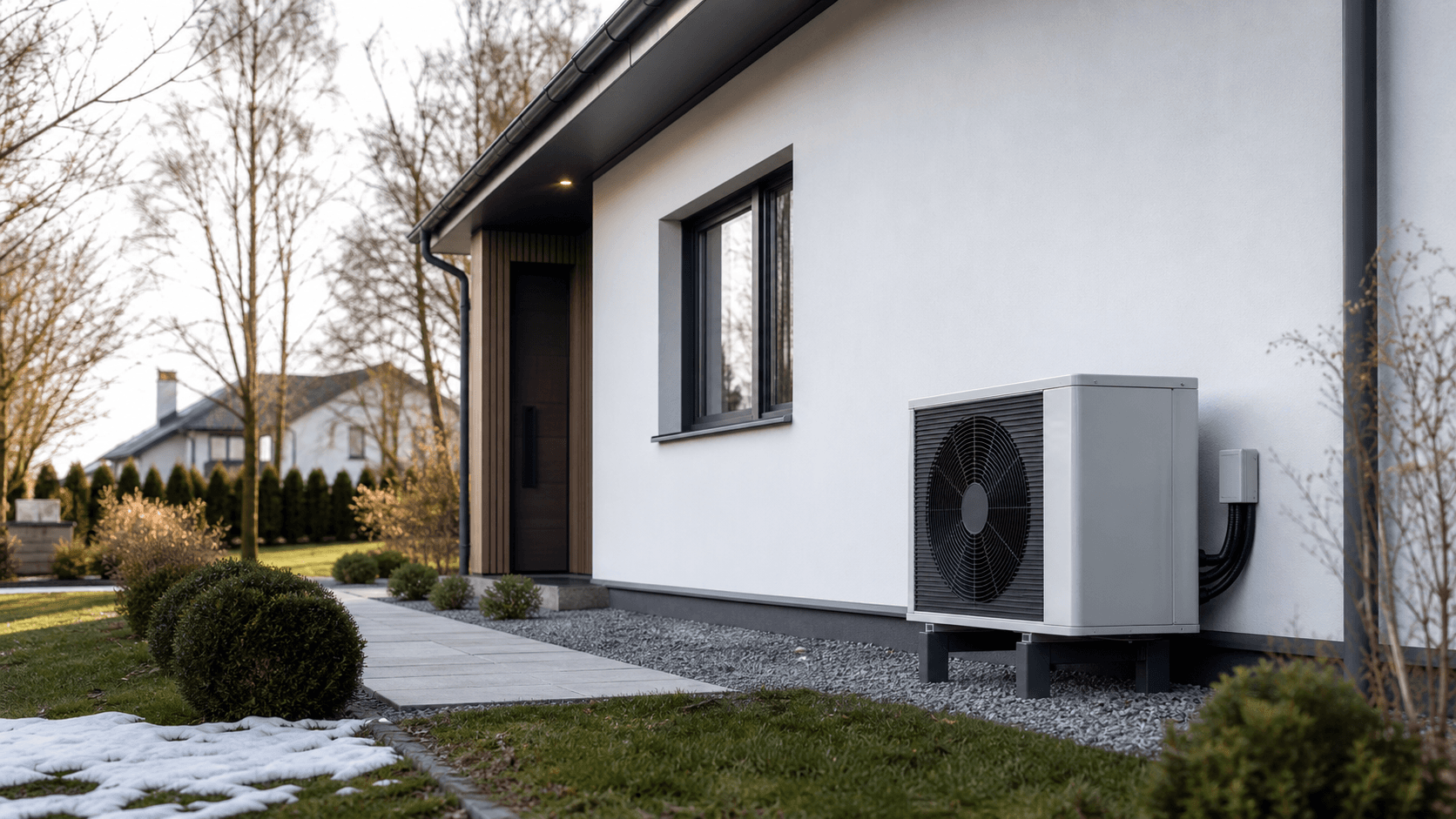
What a heat pump is
A heat pump moves heat from outside the home into the heating system. The source can be outdoor air, the ground or water. The heat is then delivered through underfloor heating, low-temperature radiators and often a domestic hot water cylinder.
The important point is that a heat pump does not use electricity like a simple electric heater. It uses electricity to move heat. In typical conditions, one unit of electricity can deliver several units of heat, although the exact result depends on outdoor temperature, flow temperature and system design.
The main types
Air-to-water heat pumps are the most common choice for single-family homes. They are usually cheaper to install than ground-source systems, do not need boreholes and fit well with new low-energy homes. Their efficiency changes through the season because outdoor air temperature changes.
Ground-source heat pumps cost more upfront because they need boreholes or ground loops, but the ground temperature is more stable than air. That can mean steadier winter performance and lower running costs, especially in colder climates or larger houses.
When a heat pump makes sense
A heat pump is strongest in a house with good insulation, airtightness and low-temperature heating. Underfloor heating is ideal, but carefully sized radiators can also work. The system should be selected from a heat loss calculation, not from floor area alone.
In an older house, a heat pump can still be a good choice, but the building may need work first. Insulation, windows, radiator sizing and heating controls can matter as much as the unit itself. If the system needs very high flow temperatures for much of the winter, efficiency falls and running costs rise.
How much a heat pump costs
For a typical new single-family house in Europe, an installed air-source heat pump often lands in a broad range of about EUR 10,000-25,000, depending on country, specification and installation scope. Ground-source systems are usually higher, often around EUR 20,000-40,000 or more once boreholes, collector loops and plant-room equipment are included.
The unit price is only part of the budget. A complete package may include the hot water cylinder, buffer tank, pumps, valves, controls, electrical work, commissioning, warranty conditions and changes to the heating distribution system. A cheap quote can become expensive if these items are excluded.
Running costs
Running cost depends on the home's heat demand, electricity tariff, seasonal efficiency and water temperature. A compact, well-insulated new house may use far less energy than a larger or older property, so neighbour-to-neighbour comparisons are often misleading.
The cleanest estimate starts with annual heat demand. Divide it by a realistic seasonal performance factor, then multiply the electricity use by the tariff. Solar PV can improve the annual balance, but it does not remove the winter mismatch: the heating season is when solar production is usually lowest.
Advantages
The first advantage is convenience. There is no fuel delivery, ash, oil tank or combustion appliance to manage. A heat pump can serve space heating and hot water, and some systems can provide gentle summer cooling.
The second advantage is energy performance. A well-designed system can reduce local emissions and help a new home meet strict energy standards. It also gives the owner useful data: electricity consumption, operating hours, temperatures and service history can all be tracked.
Disadvantages and risks
The main drawback is upfront cost. A heat pump usually costs more to install than a simple boiler or direct electric heating. The second risk is poor design. Oversized units can cycle too often, undersized systems may rely on backup heaters, and bad hydraulic design can ruin efficiency.
Noise and placement also matter. The outdoor unit needs airflow, drainage for condensate, access for service and a location that respects neighbours and bedrooms. These choices should be made before landscaping and external finishes are locked in.
Comparison with other heating options
Gas can be cheaper upfront where a connection already exists, but it brings fuel-price exposure, combustion servicing and usually a flue. Oil is rarely attractive in new homes because it needs storage and is exposed to volatile fuel prices.
Direct electric heating is simple and cheap to install, but expensive to run in a home with meaningful heat demand. Biomass, pellets and wood can work well in some regions, but they need storage, deliveries, cleaning and more owner involvement. District heating can be excellent where available, but the owner has less control over future tariffs. Solar PV is a useful partner for a heat pump, not a complete heating system by itself.
How to compare quotes
Compare scope before price. A useful quote should include heat loss assumptions, selected capacity, cylinder size, buffer strategy, controls, electrical works, commissioning, warranty, service requirements and exclusions. Ask what flow temperature the calculation assumes and whether backup electric heating is expected in normal winter operation.
The contractor should ask about insulation, windows, ventilation, heated area, hot water use and the existing or planned heating emitters. If those questions are missing, the quote is probably not based on the building you are actually going to heat.
before choosing a heat pump
- confirm the home's heat loss, not only the floor area
- design for low flow temperatures
- compare full installation scope, not only unit price
- plan outdoor unit location, noise, drainage and service access
- estimate running cost using a realistic electricity tariff
- check warranty, servicing rules and commissioning documents
- keep drawings, photos, invoices and handover notes together