
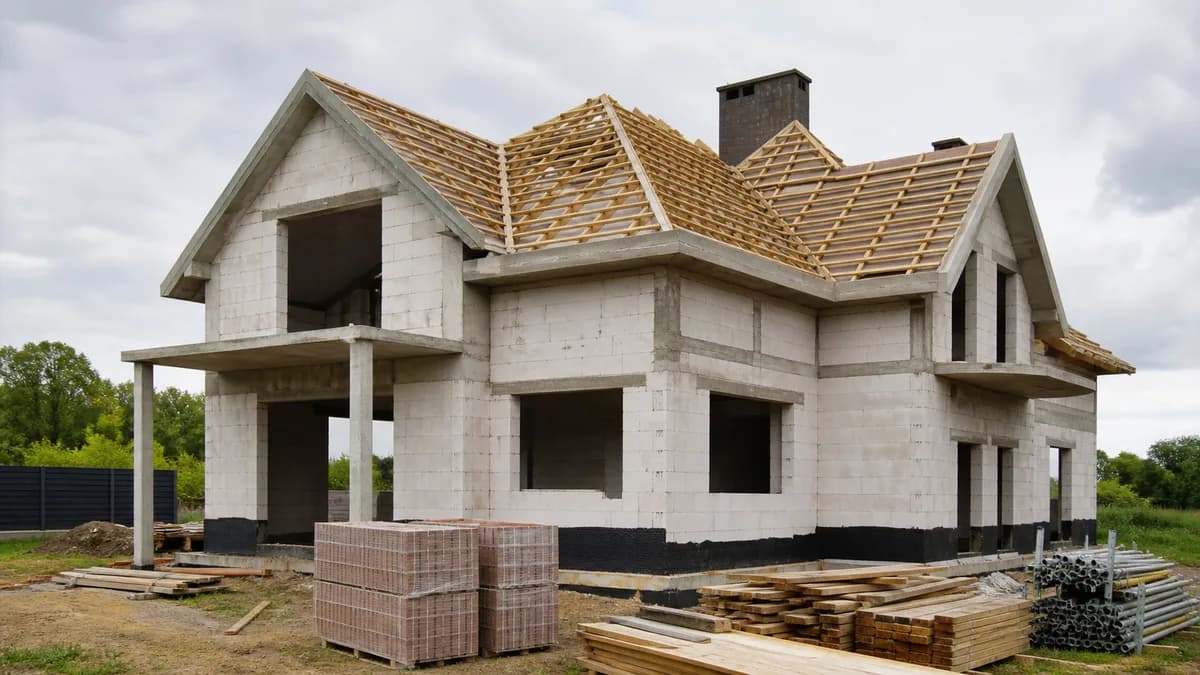
What is included in a shell stage
An open shell usually includes excavation, foundations, waterproofing, walls, floors, stairs, chimneys, roof structure and sometimes roof covering. The scope varies by country, contractor and project. Some quotes exclude insulation, equipment, transport, scaffolding, waste or supporting materials.
A closed shell usually adds external windows, doors and garage doors. This is a major difference. External joinery can change the budget significantly and also affects when services, plastering and interior work can begin.
Main shell cost drivers
The strongest drivers are building shape, foundations, structure and roof. A compact house without a basement and with a simple roof is easier to price than a design with complex corners, large openings, balconies, projections, basement or complicated structural details.
Site conditions matter as well. Difficult soil, groundwater, limited access, additional excavation, stronger foundations or more waterproofing can increase the budget before walls even start. That is why a soil survey and clear foundation scope matter more than a rough cost per square foot.
How to compare shell quotes
Do not compare only the final number. Check whether the quote includes materials, labor, equipment, transport, formwork, reinforcement, waterproofing, scaffolding, waste removal and corrections. Clarify who orders materials, who manages deliveries and what happens if site conditions require changes.
A good quote should be mapped to stages: foundations, walls, floors, stairs, chimneys and roof. This makes the expensive parts visible and helps you see where extra costs may appear.
Payment terms are part of the comparison as well. A low quote with large advance payments, unclear material responsibility or no correction process can be riskier than a higher quote with clear milestones. At shell stage, cash flow can move quickly because concrete, reinforcement, masonry materials and roof components are ordered in large batches.
Where extra costs appear
Extra shell costs often come from unclear scope. A second delivery, more concrete, different reinforcement, additional waterproofing, changed material or work not included in the first quote can quickly move the budget. If these changes are not recorded immediately, they become hard to explain later.
Decisions made on site also create risk: moving an opening, changing a chimney, adding a lintel, correcting stairs or modifying roof details. Each change should have a cost, reason and schedule impact.
The most expensive surprises often start before walls go up. Ground replacement, deeper foundations, drainage, additional waterproofing or site access problems can consume a large part of the reserve early. A soil survey and a clear foundation scope are usually more useful than choosing the lowest headline price.
How to control shell cost
Track each part of the shell separately: planned cost, accepted quote, paid invoices, extra work and acceptance status. Add photos of reinforcement, waterproofing, penetrations and elements that will be covered later.
BuildIQ helps connect costs with documents and photos. If an invoice belongs to foundations, it should sit with foundations. If a photo documents waterproofing before backfill, it should be attached to the same stage. This keeps the shell budget readable instead of scattered across messages and folders.
Common questions about shell cost
Is open shell the same as closed shell? No. Closed shell usually includes external joinery, while open shell does not fully close the building.
Is the roof always included in shell cost? Not always. Check whether the quote includes roof structure, covering, flashings, gutters, roof windows and labor.
When should extra costs be tracked? From the first stage. Foundation and structure overruns affect the budget long before services and finishes begin.
Should labour and materials be priced separately? Often yes. Separate lines make it easier to see whether an increase comes from material prices, changed quantities or additional work.
shell cost control
- define whether the quote covers open shell or closed shell
- split cost into foundations, walls, floors, roof and external joinery
- compare quotes by scope, not only by final price
- record extra work, transport and material changes immediately
- document covered work with photos
- attach invoices to the relevant shell stage
- keep a reserve for soil, waterproofing, concrete, reinforcement and corrections